.jpg)
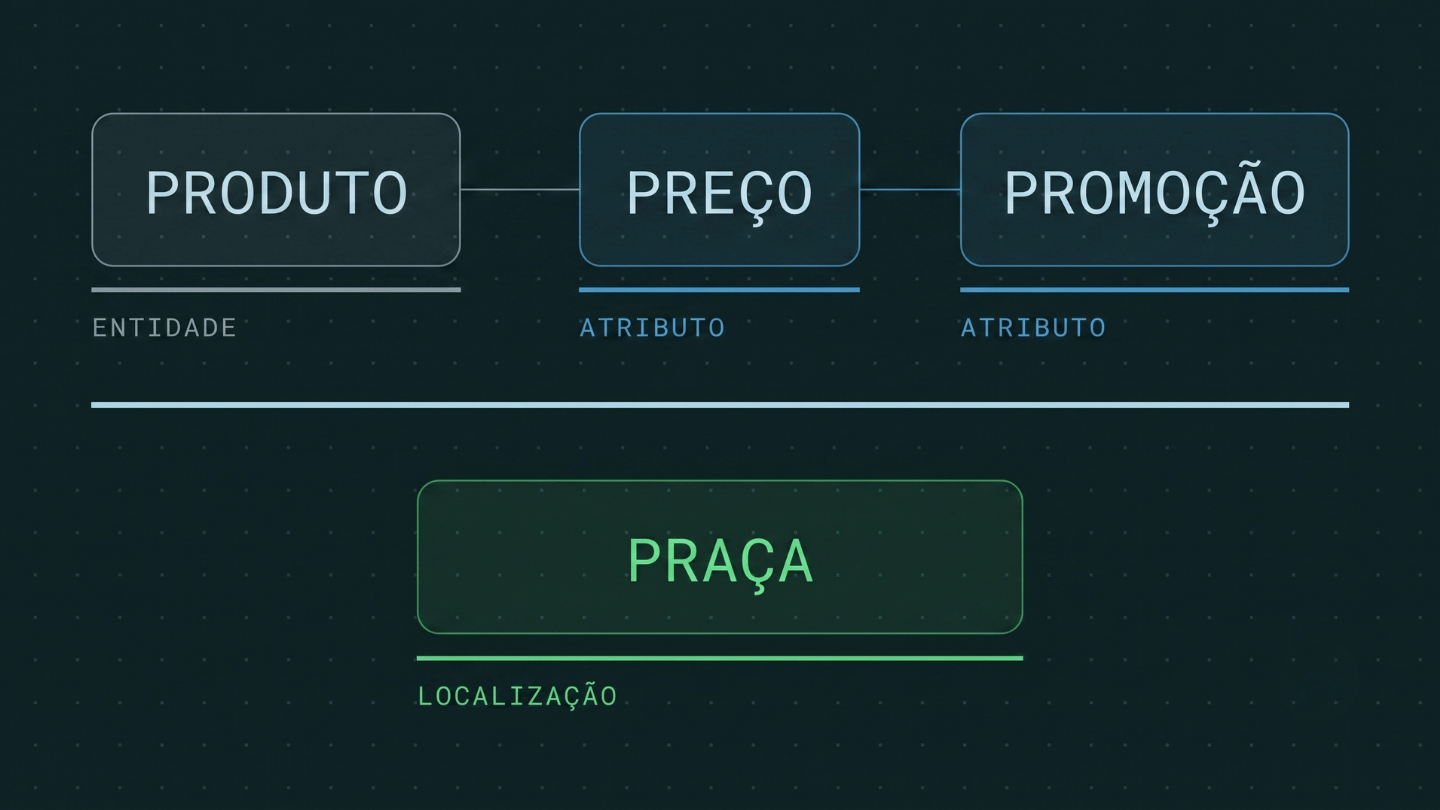
A franchise that uses a professional Geomarketing tool can define ideal territories for its franchisees
That is in your best interest.
Let's imagine a network that is starting out and is very generous in defining market areas.
It may seem like a good option at first, but soon this network will hit its market limit and will not be able to grow any more.
The consequence of this is that you will be part of a limited network, with fewer resources for marketing and product development.
The opposite is even more complicated.
A network that names territories without a good definition of the market will not be sure that that unit can even achieve the promised results.
As you can see, there is no such thing as a positive scenario.
If that, then that
This is the criterion that franchises should use to design market areas, preferably close to those that were used as the basis of the network's reference units.
The Income Statement document contains the estimated costs and revenues for a unit, with the profit margin that the franchisee will have.
This expectation is only realistic in a region of a similar size.
Good results cannot be expected in a region with half the reference potential.
Therefore, even if it is not part of the Offer Circular or the Income Statement, the market metrics that guide the expansion must be informed and validated in a specific study for your area of activity.
Franchise Expansion Strategies
When the franchise was formatted, it established its operating standards and sales expectations by region.
Let's imagine the very common case of a franchise that performs optimally in places with 30,000 inhabitants and at least 50% of them in households with A/B income.
This market reality finds possibilities for expansion in several places in Brazil, but not in all.
But that's not all.
The strategy also depends on the logistical service capacity.
Even if places with the profile of 30,000 inhabitants of AB income exist, they may be dispersed across the territory and it will be difficult to provide support and supply to everyone.
A franchise must prioritize target regions with high potential.
They do this in search of contagion benefits, which is when customers start to see the brand at various points and this increases their perception of value.
It's no use having 60 units scattered across the 27 units of the Brazilian federation.
When it is much more efficient to have them concentrated in some places with greater potential and with more means of servicing the franchise.
Naturally, this concentration also has to be taken care of, as focusing too much can lead to two scenarios:
Saturation - when the network intentionally brings units closer together so as not to leave room for competition.
The intention to ward off competitors may be good, but without proper care it can lead to a scenario of overlap between network units.
Cannibalization - when market areas are contested by units of the same network, reducing their performance.
The Globo Play series about the animal game world in Rio de Janeiro addresses an essential aspect of this group's power, the soundness of its territorial rules.
Those who watch will see that the disputes, when they take place, are within the territories and not in attempts to alter the already consolidated design.
The result of this territorial stability is the collective strength that families have, with a strong influence on samba schools and the Rio de Janeiro carnival.
References
Analysis methodology for franchises
-----------------
Other chapters:
- Presentation
- From entrepreneur to entrepreneur
- Reason for being of franchises
- Law and Order
- Where to start and how far you can go
- Territories in franchises
- Benefits of Geomarketing in the design of territories
- Critical Analysis of Expanding a Network
- Each one in its own square