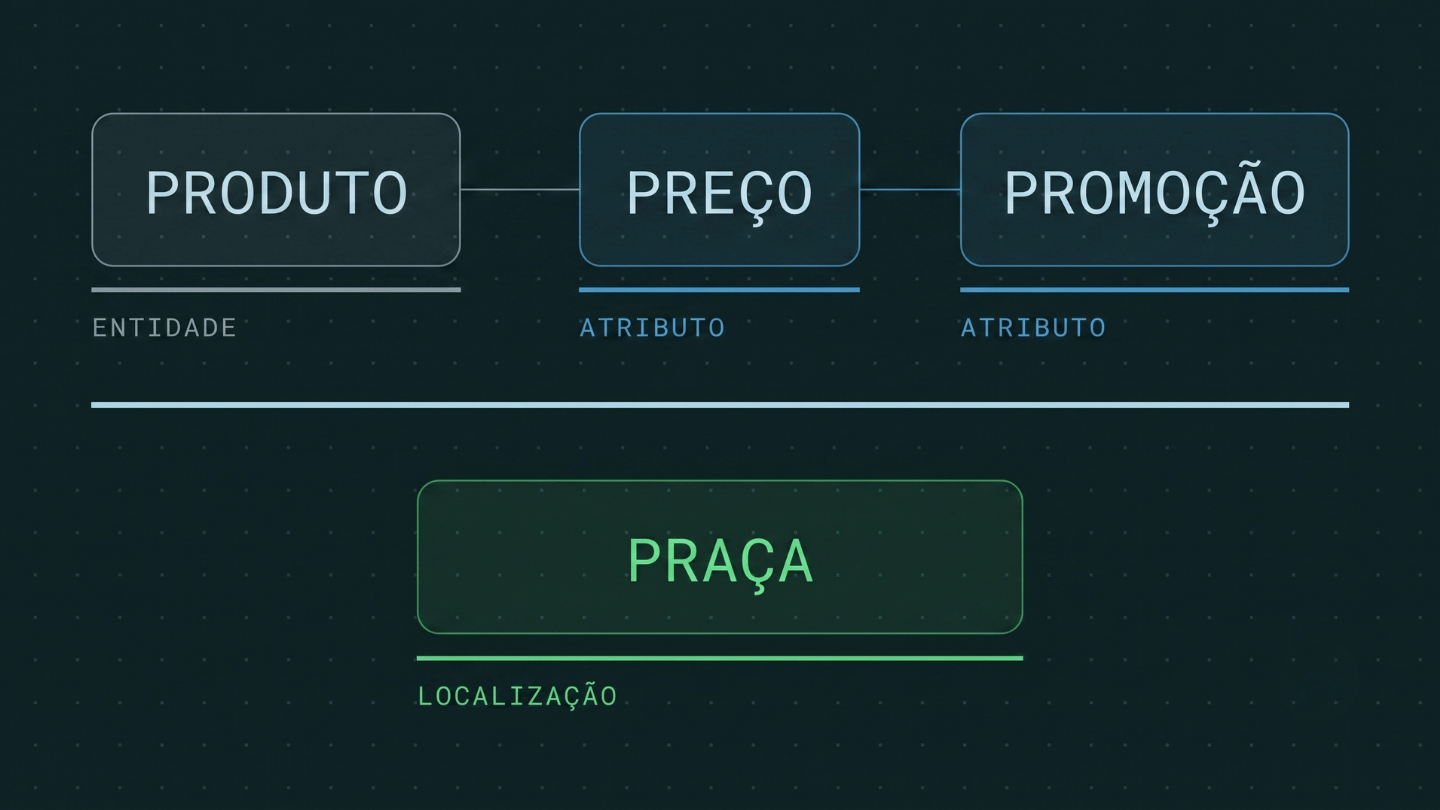
.jpg)
What changes from Geomarketing carried out by the largest retail chains with their own stores to that carried out by franchises?
Expansion of own stores
A retail network expands with its own capital, even if it has the participation of investors or banks, the network is a unique agent in this process.
In general, a budget is established for store expansion, with an estimated value per new store proportional to the opening goal.
A more mature network already knows its commercial performance and can predict average rates of return for investment in expansion.
Payback, break-even point, occupancy cost, and expected sales per m² are widely used metrics.
Intelligence departments use Geomarketing to interpret network performance in relation to market size and profile, pointing to hot regions for expansion.
Expansion Managers conduct the process of identifying commercial outlets, approving proposals with the internal committee and, if interested, proceed to the stages of property negotiation, legalization, and construction.
Once the store is inaugurated, it is transferred to the operations and sales teams.
Expansion by franchises
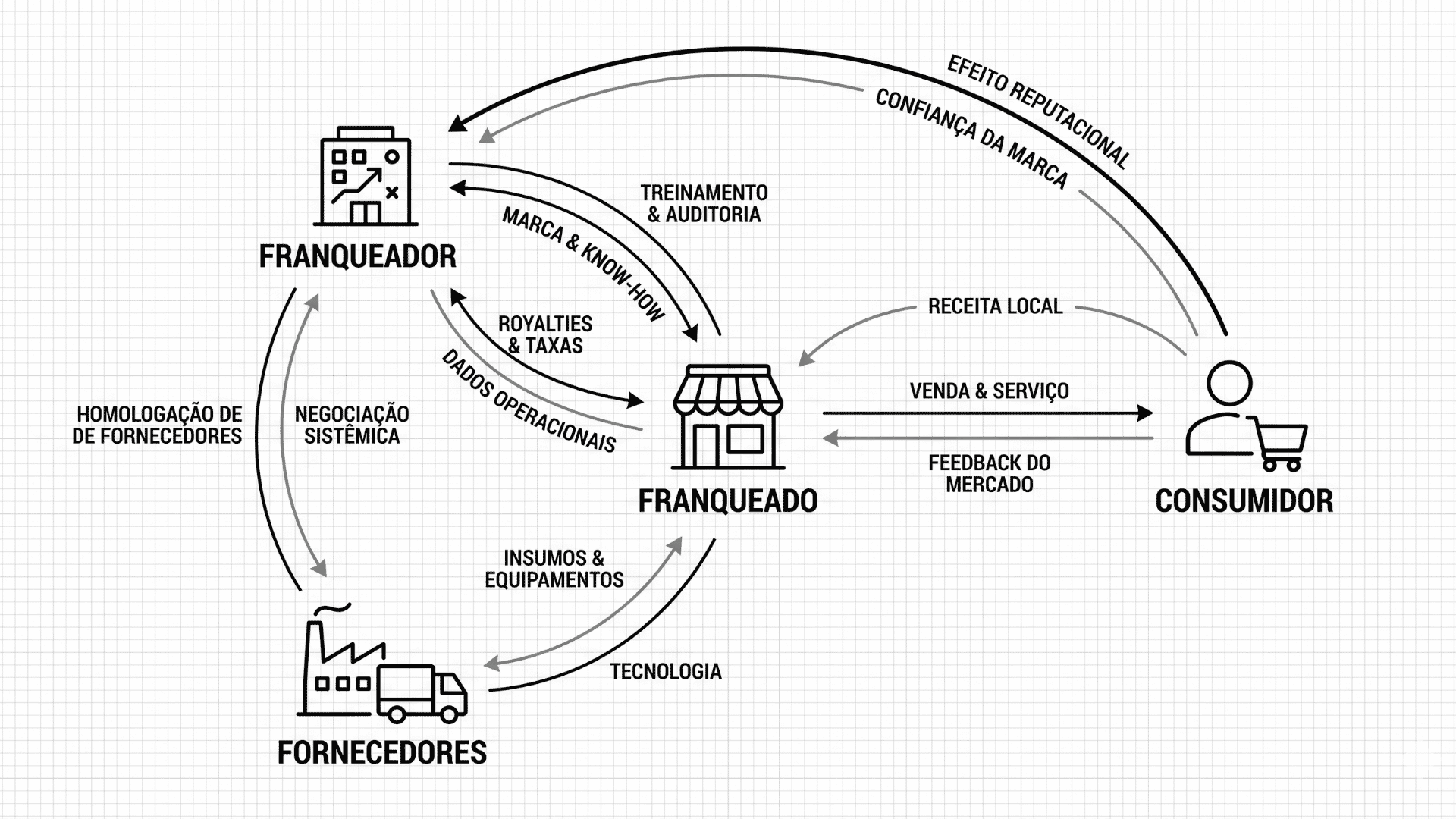
Unlike a chain that operates its own stores, franchises are a partnership between the chain and the store operator, the franchisee.
The balance of the partnership can vary greatly, with more or less freedom of action on the part of the franchisee.
There are cases in which the stores do not even operate, which are owned by you but managed by professionals appointed by the network.
The appeal of the brand and the business being offered attracts the attention of potential franchisees, who will further evaluate the viability and their interest in being part of this network.
The typical assessment made by the expansion committees of chains with their own stores is made by the potential franchisee, so the chain must indicate in its Franchise Offer Circular what are the payback references, break-even point, occupancy cost and expected sales per m2.
Some franchises are so sure of their commercial performance that they even guarantee a minimum revenue or cover a Part of the rent for a certain period.
Therefore, a franchise network does not work with the budget limitation typical of chains with their own stores, but with the investment to be made by the franchisee.
This allows a more accelerated expansion of the business, leading to gains in scale that end up strengthening the network itself.
A franchise that is expanding rapidly ends up attracting the interest of potential franchisees and accelerates its consolidation cycle even more.
This is the moment when the franchise becomes “hot” in the market, and when it must resist and ensure the quality level of its locations.
Not all franchises are well aware of how to maintain this level and may superimpose stores in the same region, the so-called cannibalization, or take little care in validating markets and opening at points with the lowest sales potential.
This leads to crises with franchisees and may even affect the network's reputation, which then “cools down”, making it difficult to attract new franchisees.
Good intelligence analyses for franchises include:
- Definition of areas of interest for expansion, often guided by logistical and operational availability.
- Understanding of ideal market characteristics for opening a unit, such as minimum market size and expected audience profile.
- Clear notion of the attractiveness of the business, according to the type of operation, ranging from convenience, or proximity, through delivery only, to specialized items, which have a wider appeal.
- Understand the typical Area of Influence of a unit, the correct size of the area that will guide the expansion and validation studies of commercial outlets. After all, it will be within this area that there must be a market size, from minimum to ideal, for the unit to prosper.
This will be the area to be preserved, preferably with some space to separate it from other network units, thus reducing the risk of overlapping such cannibalization.
- The delivery area may be wider, since it does not depend on attractiveness, but on the agility to bring the products to the customer.
- Therefore, the importance of the gap in the design of the Area of Influence, since the gap can also include the delivery area.
This care leads to the design of safer franchise territories for the network and for the franchisees.