.jpg)
It was a first-class city, when it engaged in second gear it had already finished.
There are places so small and cohesive that it hardly makes sense to think about separating them, since they work as a whole, making it possible to go from one end to the other in a few minutes.
Just as there are places so large that they add up to cities in themselves, such as metropolises and megalopolises.
The larger a place, with more people inhabiting and moving around, the greater the complexity of its network of spatial relationships, with parts functioning as dormitories and others as dynamic business centers.
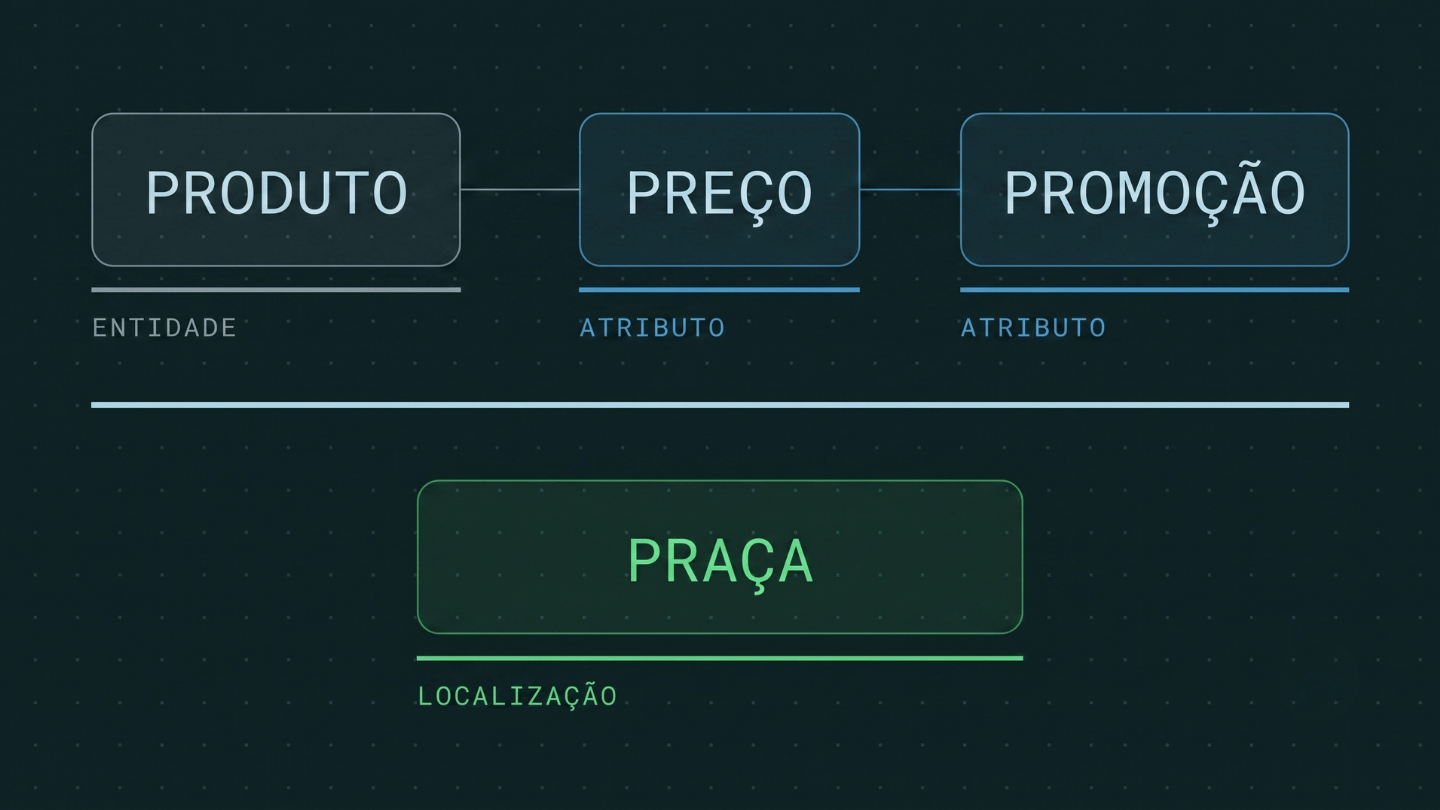
When studying larger markets, we have the task of decomposing these spatial roles, separating their parts into blocks that make sense in themselves and in relation to the whole.
We call this work Spatial Segmentation or Geographic Segmentation.
The ability to divide space is valuable, starting with the fact that different criteria can be used to execute it.
Cut and cut
Even bovine cuts can vary greatly, with the Brazilian standard respecting the anatomy of the limbs, seeking to keep them cohesive, while the American standard is more linear and crosses parts.


It is interesting to note that this mentality is more comprehensive, also reaching territorial divisions.
Since in Brazil we have the design of states delimited by natural boundaries such as mountain ranges and rivers, while in the United States the cut is linear on the map.


When dividing a city into parts, we begin with the basic division of center and periphery, with larger cities having more centralities in addition to the typical region called center.
This leads to a classification of your regions by some additional criteria, such as activity profile: industrial center, popular commercial center, business center.
In 2021, while still during the pandemic, we published a study on São Paulo Neighborhood Profile with emphasis on the profile of its workers.
The focus was on identifying the most vulnerable regions and those that were growing due to the presence of professionals who could work from home, the Creative Class.

There are numerous possible approaches and we have covered them in other articles:
What are niche markets?
The concept of identifying needs that have not yet been fully met.
A niche to call your own
Techniques for identifying niches
Cutting out the market
Once you've found a good niche, it's time to measure its size.
Consumer Behavior
Mental niches, ways of perceiving reality that shape new preferences.
Evolving with segmentation
How to use the niche technique even in markets that aren't niches.